
Compound Interest & Investing










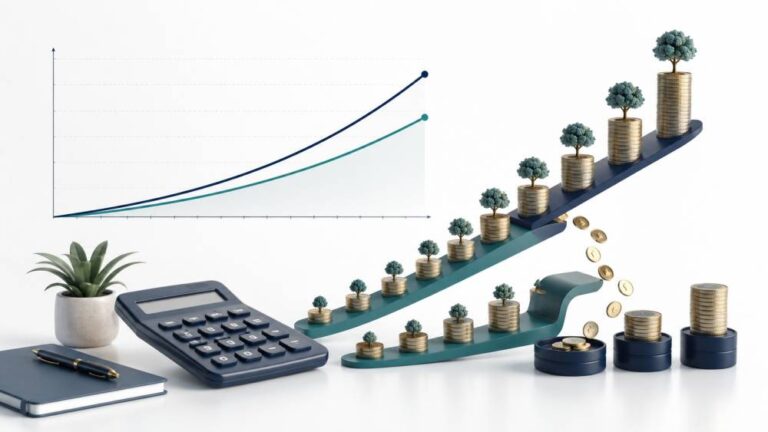

Plan Long-Term Growth With Greater Clarity
Small financial decisions can produce very different results when they are repeated over many years. The Compound Interest & Investing calculators are designed to help you see those differences before committing money to a particular plan. Whether you are comparing a one-time investment with regular contributions, estimating the future value of savings, or examining how fees affect a portfolio, these tools turn financial assumptions into understandable projections.
Compound interest is the process of earning a return on both the money you originally invested and the growth that has already accumulated. Over short periods, that additional growth may appear modest. Over ten, twenty, or thirty years, however, the combination of time, reinvestment, and recurring contributions can become a major part of the ending balance. Adjusting the interest rate, contribution amount, compounding frequency, or investment period can show which factors have the greatest influence on the outcome.
Explore More Than a Final Number
The calculators in this section can help you explore investment growth from several perspectives. A future value calculation estimates what money could become after earning a selected rate of return. A present value calculation works in the opposite direction by estimating what a future amount is worth today. Recurring investment tools show the potential effect of making deposits weekly, monthly, or annually instead of relying on one initial contribution.
You can also examine factors that are sometimes overlooked. Dividend reinvestment may increase the number of shares held over time, while investment fees can quietly reduce the amount left compounding for you. Inflation calculations place future balances into purchasing-power terms, helping distinguish between a larger account balance and a genuine increase in what that money may be able to buy. The Rule of 72 provides a quick estimate of how long it could take an investment to double at a particular rate.
Compare Realistic Scenarios
An investment projection is only as useful as the assumptions entered. A steady annual return makes planning easier, but real investments rarely grow at exactly the same rate every year. Markets rise and fall, dividends can change, taxes may apply, and fees vary between accounts and providers. For that reason, it is often helpful to calculate conservative, moderate, and optimistic scenarios instead of relying on a single result.
Try changing one input at a time. Compare starting earlier with contributing more later. Examine the difference between a lower-cost investment and one with a higher annual fee. Test how monthly deposits affect the result when the expected return remains unchanged. This approach makes it easier to identify the decisions you can control.
These calculators are educational planning tools rather than predictions or personalized investment advice. Use them to ask better questions, compare possibilities, and understand how time, contributions, returns, inflation, dividends, and fees may work together as you develop a long-term financial strategy.