
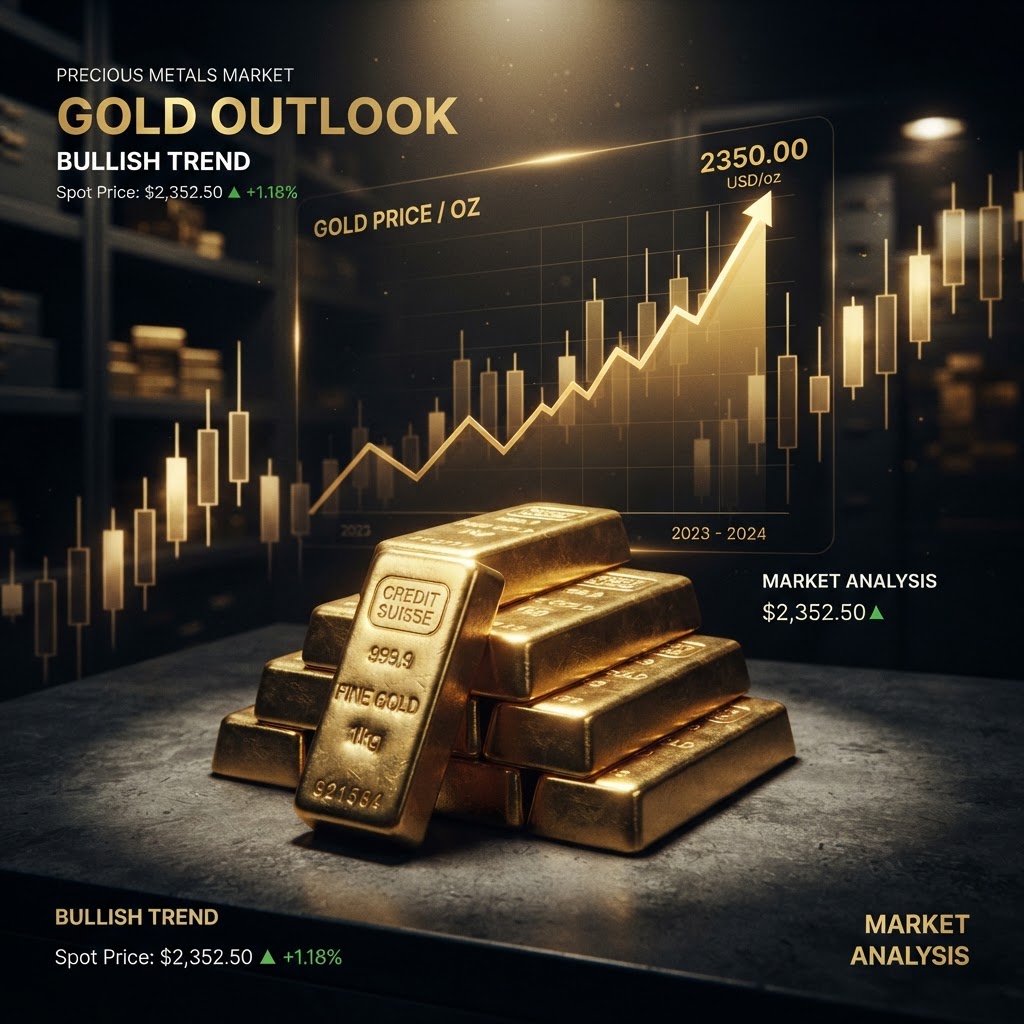
Gold is the oldest financial asset in human history, and it remains one of the most widely held and closely watched. For 5,000 years, gold has served as a store of value, a medium of exchange, and a hedge against the failure of paper currencies. In modern markets, gold occupies a unique position — it is simultaneously a commodity, a monetary asset, and a safe-haven investment. Understanding what moves the gold price is essential for any investor who wants to read the broader market, because gold’s movements often signal shifts in inflation expectations, interest rate expectations, and confidence in the financial system that other assets do not capture as clearly.
The Real Interest Rate Driver
The single most important driver of the gold price over the modern era is the real interest rate — the nominal interest rate minus inflation. Gold pays no yield. It generates no dividends, no interest, no cash flow. Its only return is price appreciation. When real interest rates are positive and rising, gold faces a headwind, because investors can earn a real return on bonds and cash without taking price risk. When real interest rates are negative or falling, gold faces a tailwind, because the opportunity cost of holding a non-yielding asset falls.
This relationship explains much of gold’s historical price action. During the 1970s, when inflation was high and real rates were deeply negative, gold soared. During the 1980s and 1990s, when the Federal Reserve raised rates and real rates turned positive, gold entered a two-decade bear market. During the period following the 2008 financial crisis, when central banks pushed real rates to historic lows, gold rallied strongly. And during the inflation surge of the early 2020s, when real rates were deeply negative, gold again reached new highs. For investors reading gold movements, the real interest rate is the first variable to check, because it explains the bulk of gold’s longer-term direction.
The Dollar Relationship
Gold is priced in US dollars, which creates an inverse relationship between the dollar and gold that is one of the most reliable in financial markets. When the dollar strengthens, gold typically falls, because it becomes more expensive for buyers holding other currencies. When the dollar weakens, gold typically rises. This relationship is not perfectly tight on a day-to-day basis, but over weeks and months it is one of the strongest correlations in commodity markets.
The dollar-gold relationship is not just mechanical. It is also fundamental, because both assets serve as stores of value, and they compete with each other for that role. When confidence in the dollar is high, investors hold dollars. When confidence in the dollar falls, investors shift toward gold. This is why gold often rallies during periods of dollar weakness or during periods when investors question the long-term stability of fiat currencies. For investors reading gold, the dollar index is the second variable to check, after the real interest rate.
Central Bank Buying and Structural Demand
One of the most significant structural developments in the gold market over the past decade has been the steady accumulation of gold by central banks, particularly in emerging markets. Central banks hold gold as a reserve asset, and their buying provides a persistent source of demand that supports the price independently of Western investor sentiment. When central banks are net buyers, gold has a structural floor. When they become net sellers, gold faces a structural headwind.
Central bank buying is driven by geopolitical considerations as much as by financial ones. Countries seeking to reduce their dependence on the US dollar have been diversifying their reserves into gold, which has provided a strong underlying bid for the metal. This is one reason gold has been able to rally even during periods when real interest rates were rising, which historically would have been a headwind. The structural demand from central banks has changed the character of the gold market, making it less purely a Western investment vehicle and more a globally held reserve asset.
Gold as a Safe Haven
Gold’s traditional role in a portfolio is as a safe haven — an asset that holds value or rises during periods of market stress, currency instability, or geopolitical crisis. This role is real, but it is more nuanced than the popular narrative suggests. Gold does tend to rise during acute crises, particularly those that threaten the stability of the financial system. During the 2008 financial crisis, gold rose even as stocks crashed. During the 2020 pandemic shock, gold initially fell along with everything else before recovering and reaching new highs as central banks cut rates to zero.
However, gold is not a perfect safe haven. It does not reliably rise during every market drawdown, and it can fall during periods of rising real rates even if the stock market is also falling. The safest characterization is that gold is a hedge against currency debasement and systemic risk, not a hedge against ordinary stock market volatility. Investors who hold gold expecting it to rise every time stocks fall are often disappointed. Investors who hold gold as a long-term hedge against currency depreciation and systemic risk are generally rewarded over time.
The Investment Demand Cycle
Beyond central banks, the other major driver of gold prices is investment demand, primarily through gold-backed exchange-traded funds and physical bullion. Investment demand is sensitive to sentiment and tends to spike during periods of fear and fall during periods of complacency. When ETF holdings are rising, it signals that investors are seeking safe-haven exposure, which supports the price. When ETF holdings are falling, it signals that investors are rotating toward risk assets, which is a headwind for gold.
Tracking ETF holdings provides a useful real-time read on investor sentiment. Sustained increases in ETF holdings, combined with rising prices, suggest a durable bullish trend. Price increases without accompanying ETF inflows suggest the rally is driven by central bank or jewelry demand, which may be less sustainable. For investors reading the gold market, the combination of price action, ETF flows, and central bank buying provides a comprehensive picture of what is driving the metal at any given time.
How to Think About Gold in a Portfolio
For most investors, gold’s role is not to generate returns. It is to provide diversification and a hedge against the specific risks that stocks and bonds do not hedge — currency debasement, systemic crisis, and high inflation. A typical allocation is between 5% and 10% of a portfolio, held permanently through market cycles. This allocation does not make a portfolio richer in normal times, but it reduces drawdowns during the specific periods when other assets are under the most pressure.
The most important discipline for gold investors is to hold it permanently rather than trying to time entry and exit. Gold’s safe-haven value is most realized during the exact periods when investors are most tempted to sell it, because those are the periods when other assets are falling. The investor who holds gold through calm periods, when it may seem like dead weight, is the investor who benefits from it during turbulent periods, when it matters most. Read gold’s movements to understand what the market is signaling about rates, the dollar, and systemic risk. Hold it as a permanent diversifier. Let it do its job over full market cycles, not in individual headlines.