
If there is a single lever that moves more asset prices than any other, it is the interest rate set by the Federal Reserve. When the Fed changes its target rate, the effects ripple through stocks, bonds, gold, the dollar, real estate, and every other asset class, sometimes moving trillions of dollars of value in a single day. Yet despite the Fed’s enormous influence, most investors understand its actions only at the surface level — they know that rate cuts are “good” and rate hikes are “bad” — without understanding the transmission mechanism that connects a rate decision to the price of a stock or a bar of gold. Understanding that mechanism is one of the most valuable skills an investor can develop, because it explains why markets often react to Fed decisions in ways that seem counterintuitive.
The Discount Rate and Asset Valuations
The most direct channel through which interest rates affect asset prices is the discount rate. Every financial asset — a stock, a bond, a piece of real estate, a bar of gold — is valued as the present value of its future cash flows, discounted back to today at an appropriate rate. When the discount rate rises, the present value of those future cash flows falls. When the discount rate falls, the present value rises. This is why rising interest rates put downward pressure on asset valuations across the board, and falling rates put upward pressure.
The effect is not uniform across all assets. The assets that are most sensitive to the discount rate are those whose cash flows are concentrated far in the future. Growth stocks, particularly technology companies whose earnings are expected years and decades ahead, are the most sensitive, because most of their value is in distant cash flows. Bonds with long maturities are also highly sensitive. Assets whose cash flows are concentrated in the near term — mature dividend-paying stocks, short-term bonds, commodities — are less sensitive. This is why the Nasdaq typically moves more than the S&P 500 in response to rate changes, and why long-term bonds move more than short-term bonds.
The Earnings Channel
Beyond the direct valuation effect, interest rates also affect stocks through the earnings channel. Lower interest rates stimulate economic activity by making borrowing cheaper, which supports consumer spending, business investment, and housing. This supports corporate earnings, which supports stock prices. Higher interest rates restrain economic activity by making borrowing more expensive, which pressures corporate earnings. This channel operates with a lag, because it takes time for rate changes to work through the economy, but it is powerful and durable.
The earnings channel interacts with the valuation channel in complex ways. Sometimes they reinforce each other — falling rates boost both valuations and earnings, producing powerful rallies. Sometimes they conflict — falling rates boost valuations but signal weak economic conditions that pressure earnings, producing more ambiguous market behavior. Reading the market’s reaction to a Fed decision requires understanding which channel is dominant at that moment, which depends on the state of the economy and the reason for the rate change.
Why Markets Sometimes Fall on Rate Cuts
One of the most counterintuitive patterns in financial markets is that stocks sometimes fall when the Fed cuts interest rates, despite rate cuts being theoretically supportive. The reason is the signal the cut sends. The Fed cuts rates when it sees economic weakness, and a rate cut can signal that the economy is weaker than investors had believed. In that case, the negative earnings signal can outweigh the positive valuation effect, and stocks fall. This is particularly common when the Fed cuts rates outside of its scheduled meetings, which signals urgency and typically indicates a serious economic or financial problem.
The opposite pattern also occurs. Stocks sometimes rise when the Fed raises rates, because a rate hike can signal confidence in the strength of the economy. If the Fed is raising rates because the economy is growing strongly, the positive earnings signal can outweigh the negative valuation effect. This is common in the early stages of rate hike cycles, when the economy is robust and the Fed is normalizing policy from emergency levels. The lesson is that the market’s reaction to a rate decision depends on the context, not just on the direction of the change.
The Dollar and Commodity Channel
Interest rates affect the dollar directly, because higher rates attract capital flows from around the world seeking higher returns. A rate hike typically strengthens the dollar, and a rate cut typically weakens it. The dollar, in turn, affects every asset priced in dollars. Commodities, including gold, oil, and precious metals, typically move inversely to the dollar, because a stronger dollar makes commodities more expensive for buyers holding other currencies. This is one of the channels through which Fed decisions affect gold and other precious metals, even though those assets do not pay interest.
The dollar channel also affects the earnings of multinational companies. A stronger dollar reduces the value of foreign earnings when they are translated back to dollars, which pressures the earnings of US companies with significant international revenue. A weaker dollar boosts those earnings. This is another reason why the relationship between rates and stocks is not always straightforward — a rate hike that strengthens the dollar may hurt multinational earnings even as it supports domestic valuations through other channels.
The Bond Market as the Messenger
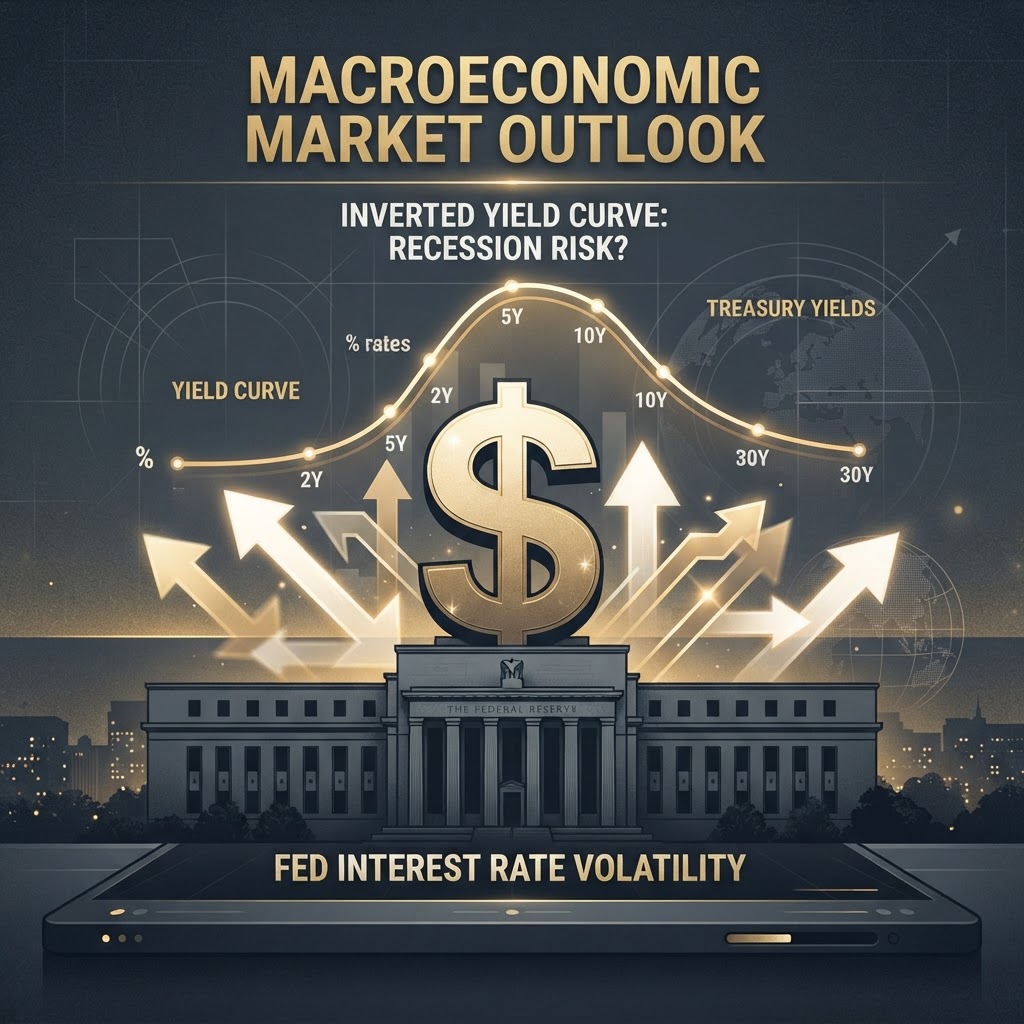
The bond market is where interest rate expectations are most directly priced, and reading the bond market is one of the most useful skills for understanding what the Fed is expected to do and how markets are positioned. The yield curve, which plots the yields of Treasury bonds across maturities, provides a rich source of information. A steepening yield curve, where long rates rise relative to short rates, typically signals expectations of stronger growth and higher inflation. A flattening or inverted yield curve, where long rates fall relative to short rates, typically signals expectations of weaker growth and often precedes recessions.
The two-year Treasury yield is particularly sensitive to Fed policy expectations, because it reflects what the market expects the Fed to do over the next couple of years. The ten-year yield reflects longer-term expectations of growth and inflation. The spread between them, the 2-10 year spread, is one of the most watched recession indicators in finance. When the two-year yield is above the ten-year yield, the curve is inverted, which has historically preceded recessions with a high degree of reliability. For investors reading the market, the yield curve is an essential tool for understanding what the bond market expects from the economy and the Fed.
How to Read Fed Decisions as an Investor
For most investors, the practical takeaway is not to trade Fed decisions directly. It is to understand the context in which they occur and the channels through which they will affect different assets. When the Fed cuts rates during a period of economic strength, it is typically supportive for stocks and other risk assets. When the Fed cuts rates during a period of acute economic stress, the signal may be negative even if the cut is theoretically supportive. When the Fed raises rates during a period of strong growth, the effects are mixed, with valuation pressure offset by earnings strength. When the Fed raises rates during a period of weak growth, the effects are typically negative across asset classes.
The most important discipline is to avoid the simple heuristics that dominate financial media. Rate cuts are not always good for stocks. Rate hikes are not always bad. The context determines the outcome, and reading the context requires understanding the state of the economy, the reason for the rate change, and the channels through which the change will propagate. The investors who understand the transmission mechanism read Fed decisions as information rather than as buy or sell signals. They use that information to understand what is happening in the market, and they make their investment decisions based on the full context, not on the direction of a single rate change. The Federal Reserve is the most powerful single force in financial markets, and understanding how it moves every asset is one of the foundations of reading the market well.