
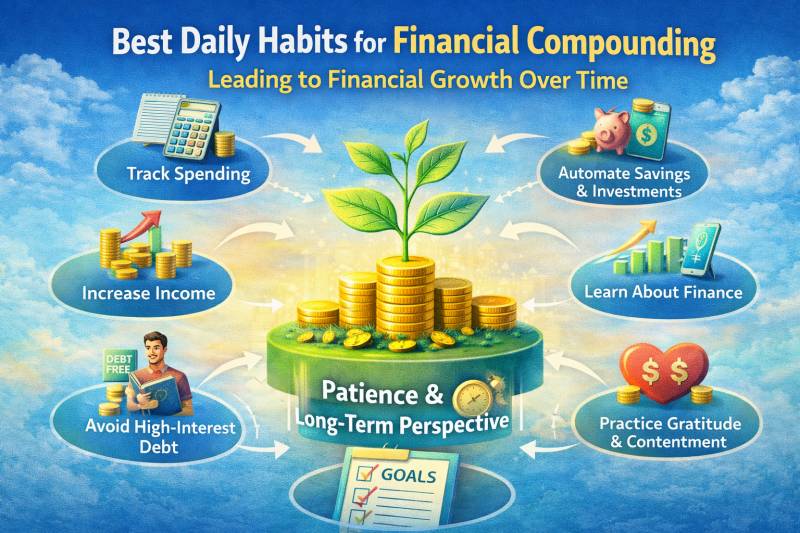
Financial success is rarely the result of one big decision or a single breakthrough investment. More often, it is built gradually through consistent daily habits that create momentum. Just like compound interest allows money to grow faster over time, small financial behaviors practiced every day can lead to significant long-term wealth.
The idea of financial compounding is not limited to investment returns. It also applies to routines, discipline, mindset, and the way individuals manage their resources. When daily habits are aligned with long-term goals, the results can be surprisingly powerful.
Tracking Spending With Intention
One of the most impactful daily financial habits is simply paying attention to where money goes. Many people underestimate how small purchases add up over weeks, months, and years.
Taking a few minutes each day to review expenses creates awareness. This awareness often leads to better decisions. Over time, reduced impulse spending can free up capital that can be redirected into savings or investments.
Even a modest daily saving of a few dollars can compound into thousands when invested consistently. The habit of tracking spending becomes a foundation for financial growth because it turns unconscious behavior into intentional action.
Automating Savings and Investments
Automation is another powerful habit that supports financial compounding. Setting up automatic transfers into savings or investment accounts removes the need for daily decision-making.
When money is invested consistently, it begins working immediately. Daily market movements, dividend reinvestments, and interest accrual all contribute to compounding growth. The earlier funds are invested, the longer they have to multiply.
This habit reduces emotional interference. Instead of waiting for the “perfect time” to invest, automation ensures progress continues regardless of market conditions or personal mood.
Over time, automated contributions can transform financial stability into financial strength.
Learning Something Financial Every Day
Knowledge compounds just like money. Spending even ten or fifteen minutes each day learning about finance, investing, or business can create exponential benefits.
Daily learning improves decision-making. Individuals become better equipped to evaluate opportunities, understand risk, and avoid costly mistakes. As financial literacy increases, confidence grows as well.
This habit can include reading articles, listening to educational podcasts, studying market trends, or reviewing investment strategies. The cumulative effect of consistent learning often leads to smarter long-term planning.
In many cases, financial breakthroughs occur not because of luck, but because preparation meets opportunity.
Increasing Income Through Skill Development
Another daily habit that contributes to financial compounding is improving income potential. This can involve practicing professional skills, building side projects, or expanding expertise in valuable fields.
When income grows, the amount available for investing also increases. This creates a multiplier effect. Higher contributions combined with compounding returns accelerate wealth building.
Even small daily efforts — such as practicing communication skills, learning digital tools, or networking — can open doors to better opportunities. Over time, these incremental improvements can lead to promotions, new ventures, or passive income streams.
Financial growth is often directly connected to personal growth.
Avoiding High-Interest Debt
Managing debt responsibly is a crucial habit that protects compounding progress. High-interest obligations can erode wealth quickly because they compound in the opposite direction.
Making daily or frequent payments toward outstanding balances reduces total interest costs. It also improves financial flexibility and reduces stress. The faster debt is controlled, the sooner resources can be redirected toward growth-oriented activities.
This habit requires discipline but delivers lasting benefits. Eliminating financial drag allows compounding investments to perform more effectively.
Maintaining a Long-Term Perspective
A daily habit that is less visible but equally important is maintaining patience. Checking investment balances too frequently or reacting emotionally to short-term fluctuations can interrupt compounding.
Instead, focusing on consistent actions — saving, investing, learning, and improving income — keeps momentum intact. Long-term thinking encourages resilience during market downturns or economic uncertainty.
This mindset supports steady progress and prevents impulsive decisions that might undermine years of growth.
Over time, patience itself becomes a competitive advantage.
Practicing Gratitude and Financial Contentment
Emotional habits also influence financial outcomes. Practicing gratitude and contentment can reduce the desire for unnecessary consumption. When individuals feel satisfied with what they have, they are more likely to prioritize saving and investing.
This daily mindset shift can lead to substantial financial benefits. Reduced lifestyle inflation allows more capital to remain invested. Compounding then works on a larger base, producing stronger results.
Financial wellness is not only about numbers. It is also shaped by attitudes and values.
Reviewing Goals Regularly
Taking a few moments each day or week to review financial goals helps maintain direction. Whether the objective is early retirement, business growth, property ownership, or building generational wealth, clarity increases commitment.
Daily reminders of long-term goals make it easier to stay consistent with productive habits. Over time, this alignment between vision and action strengthens compounding outcomes.
Goals act as a compass, guiding daily decisions toward meaningful financial milestones. 📈